

Key takeaways
- Ford TSB 17-0026 says some 2011 to 2014 F-150s with the 3.5 EcoBoost may set code P0016 because of a worn primary timing chain, and lists 8.9 Hrs. of warranty labor to diagnose and replace it.
- Ford TSB 23-2143 says some 2017 to 2020 F-150s and 2018 to 2020 Expeditions and Navigators may rattle for 2-5 seconds after sitting 6 hours or more, from a worn cam phaser; the fix replaces all four.
- Ford's extended cam phaser coverage under Program 21N03 ran only until January 1, 2023, so a phaser repair now falls outside that program.
- A tick from the cylinder block on some 2013 to 2018 F-150s and other 3.5 EcoBoost vehicles with over 20,000 miles may be a cracked piston skirt, and if the noise is in one cylinder Ford's service message recommends a new short block.
- If the engine has to be replaced, used 3.5 EcoBoost engines were typically listed at $1,950 to $7,852 and remanufactured units at $4,649 to $6,899 in our October 22, 2026 data.
3.5 EcoBoost problems by year and generation
The 3.5 EcoBoost has two generations. Wikipedia lists the first in the 2011 to 2016 F-150, and says the second generation arrived with the 2017 F-150 and the 2018 Expedition and Navigator.
The key numbers
- 8.9 Hrs.Ford warranty labor time to diagnose and replace a first-generation primary timing chainFord TSB 17-0026
- 9.6 Hrs.Ford labor time to replace all four cam phasers on a 2017 to 2020 F-150 (not the Raptor)Ford TSB 23-2143, 3.5L EcoBoost - Cold Start Ticking/Tapping/Rattle With Possible No Restart During Auto-Start-Stop Operation
- 4,120unique-VIN complaints of reduced power or driveability in NHTSA's 2011 to 2013 F-150 probe, not all from the coolerNHTSA Office of Defects Investigation
- $1,950–$7,852typical used 3.5 EcoBoost asking price, engine onlyTexas Engine Finder price snapshot
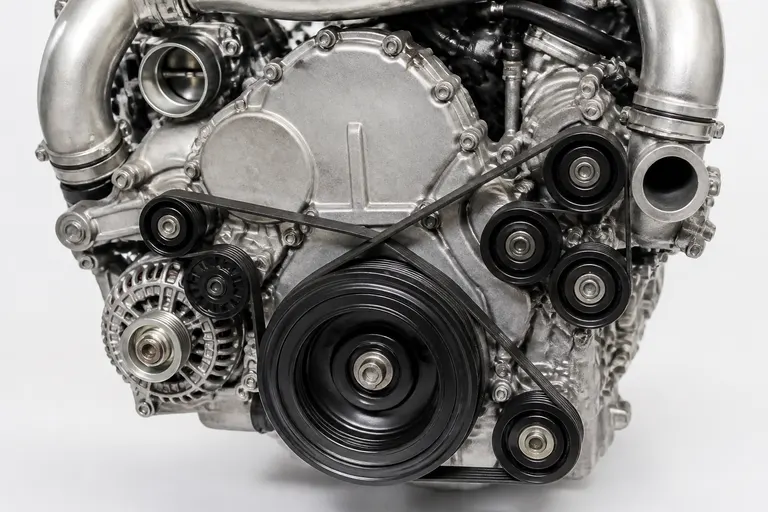
Each problem with a paper trail belongs to a stretch of model years. First-generation trucks have the timing chain bulletins and the charge air cooler investigation; second-generation engines have the cam phaser bulletins and the oil use and oil pan bulletins. The table lists each one with the bulletin that names it.
| Problem | Model years named | What you notice | What Ford did |
|---|---|---|---|
| Worn primary timing chain | 2011 to 2014 F-150, built on or before 10-Oct-2014 | Check engine light with code P0016 | TSB 17-0026: replace the primary chain |
| Cold-start rattle from the front cover | 2011 to 2015 F-150, built on or before 29-May-2015 | Rattle for 2-5 seconds after sitting 6 hours or more | TSB 18-2305: all four cam phasers and the primary chain |
| Moisture in the charge air cooler | 2011 to 2013 F-150 | Misfire and lost power on hard acceleration in humid weather | TSBs: new calibration, cooler and air deflector |
| Cracked piston skirt | 2013 to 2018 F-150; 2015 to 2018 Transit and Expedition; 2015 to 2017 Navigator | Tick from the cylinder block area, over 20,000 miles | SSM 47394: new short block if the noise is in one cylinder |
| Worn cam phasers | 2017 to 2020 F-150; 2018 to 2020 Expedition and Navigator | Rattle for 2-5 seconds after a cold soak; knock at warm idle | TSB 23-2143 and Program 21N03: replace all four phasers |
| Oil consumption, no visible leak | 2017 to 2019 F-150; 2018 to 2019 Expedition, built on or before 1-Apr-2019 | Using oil, with or without codes P0365 or P0369 | TSB 20-2132: replace both valve covers |
| Oil pan seal leak | Early-build 2017 to 2018 F-150; 2018 Expedition and Navigator | Oil leak at the oil pan | TSB 20-2051: replace the oil pan |
| Thermostat housing coolant leak | Early-build 2021 to 2022 F-150, Expedition and Navigator | Coolant leak | SSM 50835: new thermostat housing |
Timing chain wear and cold-start rattle (2011 to 2015 F-150)
Ford's TSB 17-0026 says some 2011 to 2014 F-150s with the 3.5 EcoBoost, built on or before 10-Oct-2014, may show a check engine light with code P0016, possibly with other codes and driveability concerns. It says this may be due to a worn primary timing chain.
How Ford's TSB 17-0026 confirms a worn chain
- 1Read the codesIs P0016 stored in the engine computer? If not, the bulletin does not apply.
- 2Check the build dateBuilt on or before 10-Oct-2014? If not, normal diagnosis instead.
- 3Read the cam timingWith the engine running, the VCT_INT_ACT1 reading must be +6 degrees or greater.
- 4Replace the primary chainUsing the workshop manual procedure and Ford's tensioner kit.
A second bulletin, TSB 18-2305, covers 2011 to 2015 F-150s built on or before 29-May-2015 that rattle from the top front cover for 2-5 seconds after sitting 6 hours or more. Its repair replaces all four cam phasers and the primary timing chain, with a tensioner kit.
Get a price for the part
Tell us the year, make and model. One independent supplier quotes availability, price and shipping — free to ask.
Cam phaser rattle on 2017 to 2020 engines
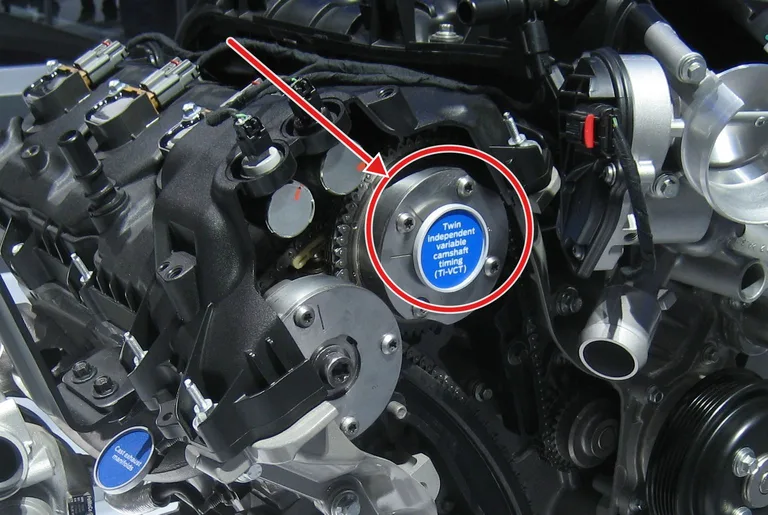
Ford's TSB 23-2143 says some 2017 to 2020 F-150s and 2018 to 2020 Expeditions and Navigators built on or before 30-Nov-2019 may rattle from the top front cover for 2-5 seconds after sitting 6 hours or more. Some may also fail to restart in auto start-stop, with or without code P164C. Ford says this may be due to a worn variable cam timing unit, or cam phaser, and its fix replaces all four.
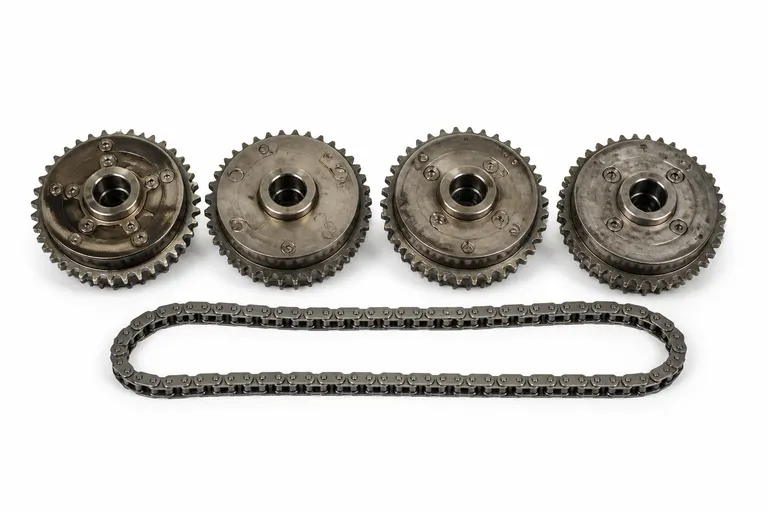
An earlier Ford service message on 2017 to 2018 F-150s and 2018 to 2019 Expeditions and Navigators says the condition does not affect long-term durability or performance. Program 21N03 extended coverage of the phasers, with Ford covering a share by mileage, but that coverage ended January 1, 2023.
If you are buying a used 2017 to 2020 engine, ask whether its phasers were replaced under these bulletins, and for the repair order that shows it.
| Mileage on the repair order | Ford vehicles: Ford covered | Lincoln vehicles: mileage | Lincoln covered |
|---|---|---|---|
| Up to 69,999 | 100% | Up to 79,999 | 100% |
| 70,000 to 79,999 | 66% | 80,000 to 89,999 | 66% |
| 80,000 to 89,999 | 33% | 90,000 to 99,999 | 33% |
| 90,000 or higher | 0% | 100,000 or higher | 0% |
Misfires on hard acceleration in damp weather (2011 to 2013 F-150)
NHTSA opened Preliminary Evaluation PE13-018 in May 2013 after 95 complaints of sharp power loss during hard acceleration in 2011 to 2013 F-150s with the 3.5 EcoBoost. About one-third of those reports came from humid or rainy conditions.
Ford told NHTSA that condensation could collect inside the charge air cooler and be drawn into the engine under hard acceleration, misfiring up to three cylinders. Ford's bulletins added a new calibration, a new cooler and a deflector, and in January 2014 it said the fix was 100% effective on 2013 trucks and 95% effective on 2011 to 2012 trucks.
Other causes of reduced power NHTSA listed
- Ignition coils and spark plugs
- Catalytic converter
- Throttle body or turbocharger
- Fuel pump or filter
- Powertrain control module, hardware or software, or transmission shifting
NHTSA closed the investigation in April 2014 with 4,120 unique-VIN complaints counted, noting that closing it is not a finding that no defect exists. It also said reduced power has many other causes, so a misfire on an early truck still needs a proper diagnosis.
A tick from the block: cracked piston skirts (2013 to 2018)
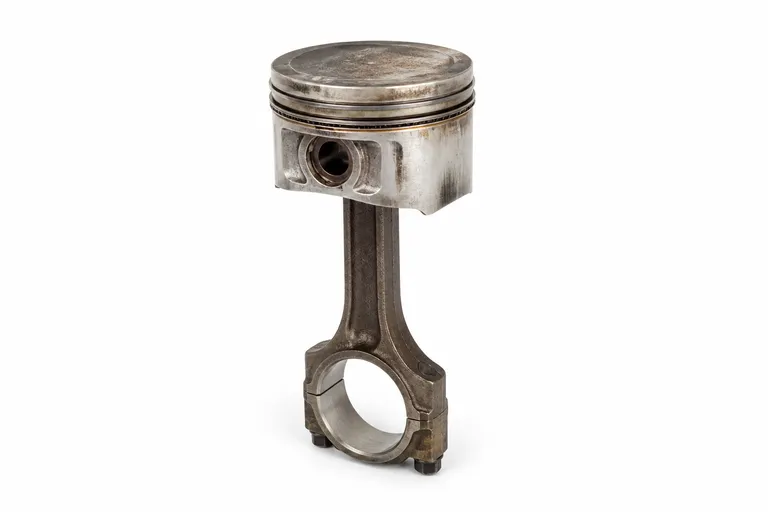
Ford service message SSM 47394 covers some 2013 to 2018 F-150, 2015 to 2018 Transit and Expedition, and 2015 to 2017 Navigator engines with more than 20,000 miles that tick from the cylinder block area. Ford says the noise may come from a cracked piston skirt.
A technician isolates it with a stethoscope; disabling the affected cylinder reduces or stops the noise. If it is isolated to one cylinder, Ford recommends replacing the short block, and it says a cracked skirt does not contaminate the engine with metal or damage the cylinder heads.
Oil use, oil leaks and coolant leaks on newer engines
Three more bulletins cover second-generation engines, mostly early builds. They are not recalls, and each one covers only trucks built before a cutoff date, so ask a Ford dealer to check yours.
Ford bulletins on 2017-and-later engines
- Oil use with no visible leak (TSB 20-2132): 2017 to 2019 F-150 (not the 2018 to 2019 Raptor or 2019 Limited) and 2018 to 2019 Expedition built on or before 1-Apr-2019, with or without code P0365 or P0369. Ford says it may be due to the crankcase ventilation system and replaces both valve covers.
- Oil pan leak (TSB 20-2051): some 2017 to 2018 F-150s and 2018 Expeditions and Navigators may leak at the oil pan seal because of poor sealant adhesion. The fix is a new oil pan.
- Coolant leak (SSM 50835): some 2021 to 2022 F-150, Expedition and Navigator engines built up to March 2022 may leak at the thermostat housing because of an incomplete weld. Ford replaces the housing.
Explorer, Taurus SHO and Flex: the internal water pump
In the sideways-mounted 3.5 EcoBoost used in cars and SUVs, the water pump sits behind the timing cover and is driven by the timing chain, according to Wikipedia. That makes a pump replacement a much bigger job than a bolt-on pump, and it is one reason the car and SUV engine does not swap into an F-150.
A class action over the chain-driven internal water pump in Ford's Cyclone (Duratec) V6 engines alleged that a leaking pump sends coolant into the oil and can ruin the engine. CarComplaints.com's report on the case names Duratec engines and does not name the EcoBoost. These were allegations, and CarComplaints.com reported in January 2024 that the case was dismissed with prejudice after Ford reached a confidential settlement with the seven named plaintiffs. If your SUV loses coolant with no outside leak, have a mechanic check the oil for coolant before you drive further.
3.5 EcoBoost recalls
Recalls are free to fix at a dealer, unlike bulletin repairs out of warranty. We searched NHTSA's recall records for the F-150, Expedition, Navigator, Explorer, Taurus, Flex, MKS, MKT and Transit from 2010 to 2024 and found five recalls on engine or engine-mounted parts that name the 3.5L GTDI engine. A sixth, on intake valves in other EcoBoost engines, does not cover the 3.5. Run your VIN, because a recall covers only the trucks built in its window.
| NHTSA campaign | Vehicles | Problem | Remedy |
|---|---|---|---|
| 16V925 (Ford 16S46) | 2016 Taurus, 2016 to 2017 Flex and MKT, 2017 Explorer with the 3.5L GTDI | Improperly brazed turbocharger oil supply tubes may leak oil on the turbocharger | Dealer inspects both turbo oil supply tubes and replaces them as needed, at no charge |
| 18V392 (Ford 18S17) | 2018 F-150, Expedition and Navigator with the 3.5L GTDI V6 | High-pressure fuel pump welds can fracture, which may cause an oil or fuel leak | Dealer replaces the pump and related parts free of charge |
| 20V098 (Ford 20S08) | 2015 to 2016 F-150 with the 3.5L GTDI and a block heater that may have been moved | The heater cable may sit too close to hot engine parts and be damaged | Dealer inspects the heater and cable and replaces parts free of charge |
| 24V851 (Ford 24S70) | 2024 to 2025 F-150, 2024 Expedition and Navigator with the 3.5L GTDI | A misaligned engine cup plug can cause a rapid oil leak | Dealer checks the cup plug and fits a new one if it is misaligned, at no charge |
| 25V198 (Ford 25S30) | 2024 to 2025 F-150 and Expedition, 2024 Navigator with the 3.5L GTDI | A misaligned engine cup plug can cause a rapid oil leak | Dealer checks the cup plugs and adds a second, shorter plug where one fails, at no charge |
| 24V635 (Ford 24S55) | 2021 to 2022 Bronco, F-150, Edge, Explorer, Nautilus and Aviator | Intake valves may break | Covers the 2.7L and 3.0L Nano EcoBoost only, not the 3.5 |
Which 3.5 EcoBoost years have the most problems?
No source we found ranks 3.5 EcoBoost years by failure rate, so the fairest answer is where Ford's own bulletins cluster. Owners quoted by SlashGear favor the 2015 and 2016 F-150, but early 2015 builds are still in the cold-start rattle bulletin, and the piston skirt message runs from 2013 to 2018.
Where the records cluster, by model year
- 2011 to 2014 F-150: primary timing chain (TSB 17-0026), cold-start rattle (TSB 18-2305) and, on 2011 to 2013 trucks, the charge air cooler misfires.
- 2015 to 2016 F-150: early 2015 builds in TSB 18-2305, the piston skirt tick, and the 2015 to 2016 block heater recall.
- 2017 to 2020 F-150 and 2018 to 2020 Expedition and Navigator: cam phasers, plus oil use and oil pan bulletins on early builds and the 2018 fuel pump recall.
- 2021 to 2022: thermostat housing coolant leak on early builds. The 2021 to 2022 intake valve recall does not cover the 3.5.
- 2024 to 2025 F-150 and Expedition, and 2024 Navigator: two recalls for a misaligned engine cup plug that can leak oil fast.
- Explorer, Taurus SHO and Flex: the chain-driven internal water pump, and the 2016 to 2017 turbo oil supply tube recall.
Whatever the year, a bulletin only applies to some trucks, usually by build date. A Ford dealer can run your VIN to see which ones match.
Watch: a high-mileage 3.5 EcoBoost F-150, reviewed

What Ford's repairs take: the warranty labor times
Ford publishes how long its dealers are allowed for each bulletin repair, and the times show these are not small jobs. A shop sets its own hourly rate and may quote different hours, so treat these as a guide to the size of the job, not a price. Your written estimate is the real number.
| Repair | Vehicles | Ford labor time | Bulletin |
|---|---|---|---|
| Diagnose and replace the primary timing chain | 2011 to 2014 F-150 | 8.9 Hrs. | TSB 17-0026 |
| Replace all four cam phasers and the primary chain | 2011 to 2014 F-150 | 9.2 Hrs. | TSB 18-2305 |
| Replace all four cam phasers and the primary chain | 2015 F-150 | 9.0 Hrs. | TSB 18-2305 |
| Replace all four cam phasers | 2017 to 2020 F-150 (Raptor 9.7 Hrs.) | 9.6 Hrs. | TSB 23-2143 |
| Replace all four cam phasers | 2018 to 2020 Expedition or Navigator | 9.8 Hrs. | TSB 23-2143 |
| Replace both valve covers | 2017 to 2019 F-150, 2018 to 2019 Expedition | 4.2 Hrs. | TSB 20-2132 |
| Inspect and replace the oil pan | 2017 to 2018 F-150, 2018 Expedition or Navigator | 2.3 to 3.6 Hrs. | TSB 20-2051 |
If the engine is beyond repair: 3.5 EcoBoost prices
In our October 22, 2026 data, used 3.5 EcoBoost engines were typically listed at $1,950 to $7,852 across 533 priced yard listings, and remanufactured units at $4,649 to $6,899. These are asking prices for the engine only, before shipping and labor.
- 3.5 EcoBoostUsed$1,950–$7,852Reman$4,649–$6,899
- 5.0 CoyoteUsed$2,000–$8,125Reman$6,999
Version matters more than the name. A 2017-or-later engine adds port injection alongside direct injection, and the F-150 and SUV engines are different units, so the supplier needs your VIN to match the right one.
Used 3.5 EcoBoost asking ranges by version
- 2012 F150first generation$3,171–$5,995Texas Engine Finder price snapshot
- 2014 Explorertransverse, no oil cooler$1,950–$2,800Texas Engine Finder price snapshot
- 2016 F150first generation$3,084–$3,806Texas Engine Finder price snapshot
- 2016 Expeditionfirst generation$2,251–$3,000Texas Engine Finder price snapshot
- 2018 F150second generation$3,500–$7,852Texas Engine Finder price snapshot
- 2021 F150second generation$2,725–$4,425Texas Engine Finder price snapshot
| Vehicle | Engine (VIN code = 8th digit) | Typical asking range | Median | Listings priced |
|---|---|---|---|---|
| 2012 Ford F150 | 3.5L turbo, code T | $3,171 – $5,995 | $3,500 | 97 |
| 2014 Ford Explorer | 3.5L turbo, code T, without oil cooler | $1,950 – $2,800 | $2,325 | 93 |
| 2016 Ford F150 | 3.5L turbo, code G | $3,084 – $3,806 | $3,375 | 100 |
| 2016 Ford Expedition | 3.5L turbo, code T, built from September 3, 2015 | $2,251 – $3,000 | $2,573 | 50 |
| 2018 Ford F150 | 3.5L turbo, code G, built through February 25, 2018 | $3,500 – $7,852 | $7,772 | 93 |
| 2021 Ford F150 | 3.5L turbo, code 8 | $2,725 – $4,425 | $3,110 | 100 |
Repair it or replace the engine?
A chain or phaser job keeps your engine but still runs to many hours of labor. A replacement engine makes sense when the damage goes beyond the timing parts, or when Ford's own advice for the problem is a new short block, as with a cracked piston skirt. Price both before you decide.
Three ways forward
- Repair the timing parts
Your engine stays in; the shop replaces the chain or the cam phasers.
Labor-heavy: Ford allows 8.9 to 9.8 hours; the shop quotes the rate
Has the diagnosis ruled out damage beyond the chain or phasers?
- Used engine
A 3.5 EcoBoost from another vehicle, matched to your generation and layout by VIN.
$1,950–$7,852 asking, engine only
Donor mileage, whether the phasers were replaced, and the warranty in writing
- Remanufactured engine
Rebuilt by a remanufacturer before sale.
$4,649–$6,899 listed, engine only
What shipping adds, and whether the warranty covers labor
Before you pay for a 3.5 EcoBoost repair
Run through these checks first. The first two can mean Ford covers it, and the rest stop you paying for the wrong repair.
Check these first
- Recalls: NHTSA's recall search takes the 17-character VIN from the lower left of your windshield, and a recalled part is fixed for free at a dealership.
- Ford bulletins and programs: a Ford dealer can run your VIN and build date against them, and check what your warranty still covers.
- Diagnosis: the FTC says a shop that only diagnoses, without selling parts or repairs, may give you an objective opinion. Ask what the diagnosis costs before you agree to it.
- Written estimate: the FTC says it should name the condition to be repaired, the parts needed and the expected labor charge.
- Match the engine: first or second generation, and F-150 or transverse SUV engine. They are not interchangeable.
How to get a price on a replacement 3.5 EcoBoost
Send your VIN and tell us the engine you need. Texas Engine Finder passes your request to one independent parts supplier, who contacts you with a quote. It costs you nothing to ask.
The supplier confirms fitment, price, availability, shipping and warranty. Texas Engine Finder does not sell, repair or install engines, so take the quote to your shop. In Texas a vehicle with a swapped engine must still have every emissions component it was built with, per Texas DPS.
Questions
Is the Ford 3.5 EcoBoost a good engine?
No source we found measures its failure rate, so there is no fair yes or no. Ford's record is a list of specific repairs by model year: timing chains on 2011 to 2015 trucks, cam phasers on 2017 to 2020 engines, and oil use and leaks on early second-generation builds. Ford says a noisy cam phaser does not affect safety, performance or emissions.
What years of the 3.5 EcoBoost have the most problems?
No source we found ranks the years by failure rate. Ford's bulletins cluster on 2011 to 2015 F-150s for timing chain wear and cold-start rattle, with 2011 to 2013 trucks also in NHTSA's charge air cooler probe, and on 2017 to 2020 engines for cam phaser rattle. The piston skirt tick message covers 2013 to 2018. Owners quoted by SlashGear favor the 2015 and 2016 trucks.
Is the 2018 Ford 3.5 EcoBoost engine reliable?
Several Ford records name 2018 engines: the cam phaser bulletin and Program 21N03, the oil use and oil pan bulletins for early builds, the piston skirt message, and recall 18V392 for the high-pressure fuel pump. A Ford dealer can tell you which apply to a given VIN and whether the work was done.
What does a bad cam phaser sound like on a 3.5 EcoBoost?
Ford describes a rattle from the top front of the engine for 2-5 seconds after it has sat 6 hours or more, and a knocking noise at idle once the engine is warm. Ford says the noise does not affect safety, performance or emissions, but its repair replaces all four phasers.
Is Ford's cam phaser extended warranty still active?
No. Program 21N03 extended cam phaser coverage only until January 1, 2023, and only for vehicles that had the 21B10 computer update by February 28, 2022. Ask a Ford dealer to run your VIN for any other open programs or recalls.
Will an Explorer or Taurus SHO 3.5 EcoBoost fit my F-150?
No. The car and SUV engine is mounted sideways, with different turbochargers and a water pump driven by the timing chain, and yards list it under a different interchange number from the F-150 engine.
Sources
- Ford TSB 17-0026, 3.5L GTDI - DTC P0016 - Primary Timing Chain Wear (March 8, 2017), filed with NHTSA (accessed October 29, 2026)
- Ford TSB 18-2305, 3.5L EcoBoost - Cold Start - Ticking/Tapping Or Rattle Type Noise - Built On Or Before 29-May-2015 (October 24, 2018), filed with NHTSA (accessed October 29, 2026)
- Ford TSB 23-2143, 3.5L EcoBoost - Cold Start Ticking/Tapping/Rattle With Possible No Restart During Auto-Start-Stop Operation (May 4, 2023), filed with NHTSA (accessed October 29, 2026)
- Ford SSM 48445, 2017-2018 F-150, 2018-2019 Expedition/Navigator - 3.5L EcoBoost - Ticking/Tapping Or Rattle Type Noise On Start Up After A Cold Soak, filed with NHTSA (accessed October 29, 2026)
- Ford Customer Satisfaction Program 21N03 – Supplement #4, Cam Phaser Replacement (March 25, 2022), filed with NHTSA (accessed October 29, 2026)
- Ford SSM 47394, 3.5L EcoBoost tick type noise from the cylinder block area, filed with NHTSA (accessed October 29, 2026)
- Ford TSB 20-2132, 3.5L - Excessive Oil Consumption With Or Without DTC P0365/P0369 - Built On Or Before 1-Apr-2019 (May 8, 2020), filed with NHTSA (accessed October 29, 2026)
- Ford TSB 20-2051, 3.5L EcoBoost - Oil Pan Leaking - Built On Or Before 19-Mar-2018 (February 25, 2020), filed with NHTSA (accessed October 29, 2026)
- Ford SSM 50835, 2021-2022 F-150/Expedition/Navigator - 3.5L EcoBoost Coolant Leak, filed with NHTSA (accessed October 29, 2026)
- NHTSA recall 18V392, Ford Part 573 safety recall report (accessed October 29, 2026)
- NHTSA recall 20V098, Ford Part 573 safety recall report (accessed October 29, 2026)
- NHTSA recall 24V635, Ford Part 573 safety recall report (accessed October 29, 2026)
- NHTSA recall 16V925, Ford Part 573 safety recall report (accessed October 29, 2026)
- NHTSA recall 24V851, Ford Part 573 safety recall report (accessed October 29, 2026)
- NHTSA recall 25V198, Ford Part 573 safety recall report (accessed October 29, 2026)
- NHTSA Office of Defects Investigation — PE13-018 opening resume (May 22, 2013) (accessed October 29, 2026)
- NHTSA Office of Defects Investigation — PE13-018 closing resume (April 7, 2014) (accessed October 29, 2026)
- Wikipedia — Ford EcoBoost engine (3.5 L, second generation) (accessed October 29, 2026)
- SlashGear — Ford's 3.5-Liter EcoBoost Engine: Which Years Should You Avoid (According To Owners) (Chloe Clougher, May 31, 2025) (accessed October 26, 2026)
- CarComplaints.com — Ford Water Pump Class-Action Lawsuit Says Engines Fail (October 7, 2018) (accessed October 26, 2026)
- CarComplaints.com — Ford Water Pump Class Action Lawsuit Dismissed (January 21, 2024) (accessed October 26, 2026)
- NHTSA — Recalls (accessed October 26, 2026)
- Texas Engine Finder price snapshot (Hollander used-yard listings and remanufacturer catalog prices, data dated October 22, 2026, shown on the 3.5 EcoBoost family page) (accessed October 22, 2026)
- FTC Consumer Advice — Auto Repair Basics (accessed October 29, 2026)
- Texas DPS — FAQs: Items of Inspection, Engine Swaps (accessed October 29, 2026)